Amethyst Meaning, Color & How to Use It — The Complete Guide
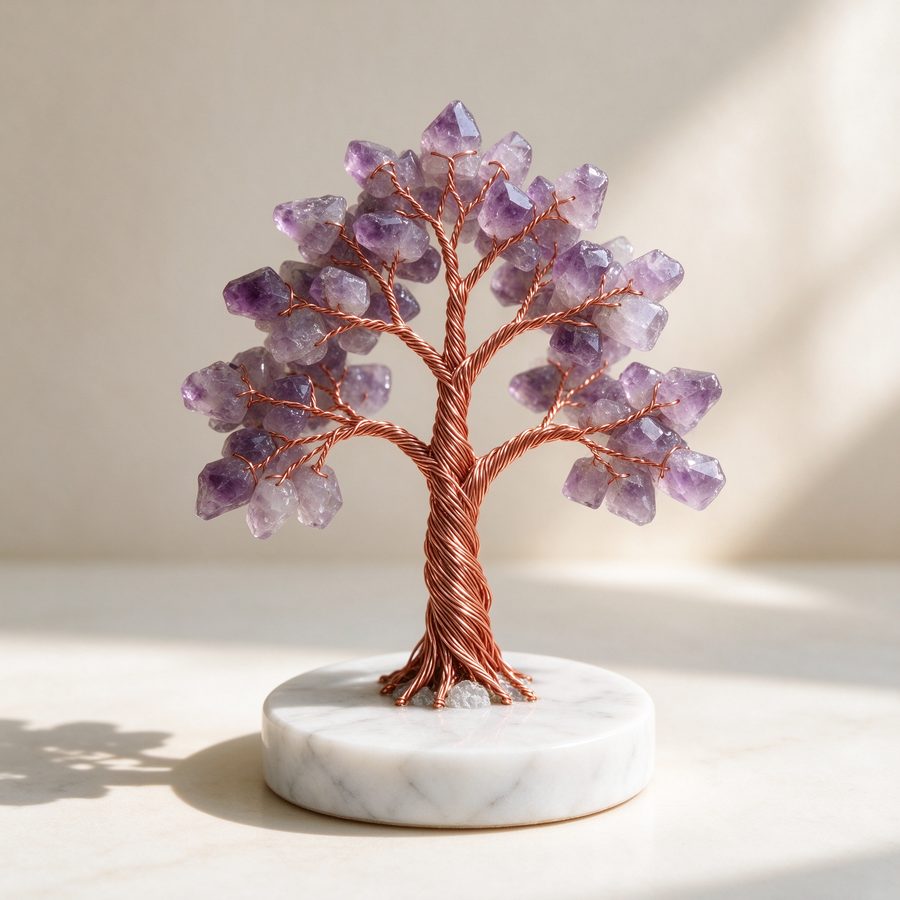
Amethyst is the most-loved stone in our studio — and the one we are asked about most. It has been prized for thousands of years, from ancient Greek wine cups to the jewelled regalia of European royalty, and today it sits on desks, bedside tables and meditation corners around the world.
This guide covers what amethyst is, where its meaning comes from, how to read its colour, and the practical ways to bring it into your home — including how we use it in CrystalTerra terrariums and décor.
What is amethyst?
Amethyst is a violet variety of quartz — the same mineral family as rose quartz and citrine. Its colour comes from trace amounts of iron in the crystal lattice, activated by natural radiation over millions of years. It forms in geodes deep underground, which is why the most dramatic amethyst clusters look like caves lined with crystals.
It ranks 7 on the Mohs hardness scale, making it durable enough for everyday jewellery and sturdy enough for tabletop pieces.
Where the meaning comes from
The name comes from the ancient Greek amethystos — literally "not drunk." Greek legend told of a nymph named Amethyst turned to stone to escape the god of wine, which is why amethyst has been associated with sobriety and clear-headedness for over two millennia.
Across cultures it picked up more roles: a protective talisman for travellers, a calming companion for prayer and meditation, and — from the Middle Ages onward — a "bishop's stone" adorning clergy rings. In modern crystal lore, amethyst is most often associated with calm, sleep, clarity and steady focus.
Tradition associates amethyst with calm and clarity — it is a decorative object for mindfulness, not a medical treatment.
How to read amethyst colour
Amethyst ranges from pale lavender to deep violet, and the depth of colour drives both look and price:
- Lavender / light — pale and airy, lovely in minimal décor and delicate jewellery; usually the most affordable.
- Medium violet — the classic amethyst shade most people picture; our favourite for terrarium clusters.
- Deep violet (Siberian / AAA) — rich, saturated colour with hints of red glow under light; the most prized grade.
- Chevron amethyst — white quartz bands layered with violet; a striking, graphic look.
Because amethyst is natural, no two pieces are identical — colour zoning, tiny inclusions and texture variations are signs of authenticity, not flaws.
Six practical ways to use amethyst at home
1. On the bedside — the classic spot
A small amethyst cluster or a crystal night light is the traditional bedside companion. Whether or not you follow the folklore, it is genuinely calming to switch off the bright overhead light and keep a soft glow for winding down.
2. In a terrarium or planter
Amethyst tucked into a glass terrarium with moss and a plant makes a living focal point. The violet contrasts beautifully with green moss, and the stone needs zero care — the plant does all the work.
3. As a bracelet you wear daily
Amethyst beads are comfortable and hard-wearing. Wearing one is a small daily ritual: every time you notice it, it invites a breath and a pause.
4. On a desk for focus
A crystal tree or a small point on the desk edge is a reminder to work with a clear head — a decorative cue, which is exactly its purpose.
5. In a meditation corner
Place a point or cluster where it can catch morning light. Many people hold one during quiet practice simply because it gives the hands something to focus on.
6. As a meaningful gift
Because its meaning is widely understood, amethyst is one of the safest stone gifts you can choose — especially for someone going through a transition, starting a new job, or setting up a new home.
How to care for amethyst
- Clean with warm soapy water and a soft cloth — no harsh chemicals.
- Avoid prolonged direct sunlight: intense UV can fade the violet over time.
- Keep it away from hard knocks against other stones (it is durable, not indestructible).
- Dust terrariums gently with a soft brush — don't submerge moss or live plants.
Bring amethyst home
Shop handcrafted amethyst terrariums, crystal trees, night lights and bracelets — free worldwide shipping, 30-day returns.
Shop amethyst pieces